What can I cook with what's in my fridge right now?
Six formulas that turn whatever is on the shelf into dinner tonight — the build-a-meal frame, what pairs with what, how to judge if something is still good, and how to get recipe ideas from a single photo.
The short version
- Almost every improvised dinner is one of six formulas: fried rice, frittata, traybake, soup, pasta with a fat-and-acid sauce, or a grain bowl. Learn the formulas and you stop needing recipes for leftovers.
- Build every improvised meal from four slots: a base (rice, pasta, bread, potato), a protein (eggs, tin of beans, cheese, whatever meat is left), something soft and cooked-down (onion, tomato, roast veg), and a hit of fat plus acid at the end.
- The acid at the end — lemon, vinegar, pickles, yoghurt — is what makes a scraps dinner taste deliberate instead of sad. It is the single most skipped step.
- If you'd rather not think about it, Cestio's Fridge Chef turns one photo of your shelf into recipes you can cook right now, filtered to your diet and the appliances you actually own.
It is 7pm. There is half a courgette, three eggs, some feta going slightly dry, a heel of bread and an onion. The instinct is to order something. The reality is that you are about ten minutes from a genuinely good dinner — you just don't have a recipe for “this exact combination of things”, and nobody does.
The fix is not more recipes. It is a small number of formulas that absorb almost anything.
The four-slot frame
Before picking a formula, look at your fridge and fill four slots. If you can fill three of them, you have dinner.
| Slot | What counts | Why it's there |
|---|---|---|
| 1. Base | Rice, pasta, potatoes, bread, couscous, tortillas, any grain | Bulk, and it makes a small amount of everything else feel like a meal |
| 2. Protein | Eggs, tinned beans or chickpeas, cheese, yoghurt, leftover meat, tinned fish | Keeps you full past 9pm |
| 3. Something cooked down | Onion, garlic, tomato, peppers, mushrooms, roast veg from another night | This is the flavour. Cook it longer than feels necessary |
| 4. Fat + acid at the end | Olive oil, butter, yoghurt — plus lemon, vinegar, pickles, mustard | The step everyone skips, and the reason improvised food tastes flat |
The six formulas that absorb anything
1. Fried rice — for leftover rice and any vegetable
Cold rice is better than fresh here. Fry the aromatics hard, add whatever vegetables you have chopped small, push it aside and scramble an egg in the empty space, then combine. Soy sauce, a splash of vinegar. Works with peas, cabbage, carrot, spring onion, sweetcorn, leftover chicken — essentially anything.
2. Frittata — for eggs and the last of everything
Six eggs, whatever cheese is going hard, any cooked vegetable. Cook the vegetables first in an ovenproof pan, pour the beaten eggs over, finish under the grill or with a lid on a low heat. It is the most forgiving thing in cooking and it is just as good cold the next day.
3. Traybake — for root vegetables and anything that roasts
Chop everything to a similar size, oil, salt, one spice you like, 200°C for 35–40 minutes. Add chickpeas or halloumi or sausage for protein. This works in an air fryer at a lower temperature too, and it requires no attention while it cooks.
4. Soup — for vegetables that are past their best
Onion and garlic in fat, add the sad vegetables, cover with stock or water, simmer 20 minutes, blend or don't. A spoon of yoghurt and something crunchy on top makes it a meal rather than a starter. This is where the slightly bendy carrots go.
5. Pasta with a fat-and-acid sauce — for almost nothing at all
Not tomato sauce — the other kind. Garlic and chilli in a lot of olive oil, a ladle of the starchy pasta water, cheese, lemon. Add tinned tuna, anchovies, broccoli, peas, anything. Fifteen minutes, and the shorter your ingredient list the better it works.
6. Grain bowl — for when everything is already cooked
Base, cold protein, one raw crunchy thing, one pickled thing, and a sauce made of yoghurt or tahini plus lemon plus salt. No cooking at all if the base is left over. This is the formula that rescues Sunday's roast on Wednesday.
The pantry that makes improvising possible
Improvised cooking works when the fridge is unpredictable but the cupboard is not. Six things do most of the lifting:
- Tinned tomatoes — the base of half of everything
- Tinned beans or chickpeas — instant protein, no planning
- Eggs — the single most useful thing in the fridge
- Onions and garlic — no dish gets worse for having them
- An acid — lemons, or a decent vinegar that keeps forever
- One hard cheese — grates over anything and turns it into a meal
Or: take a photo and let the app do it
Formulas are a skill and skills take a while. In the meantime, Cestio's Fridge Chef does the same job from a photograph: point your camera at the open fridge, and it comes back with recipes you can cook right now using what it can see — filtered to your diet, your allergies and the appliances you actually own, so it will not suggest an oven bake if you only have an air fryer.
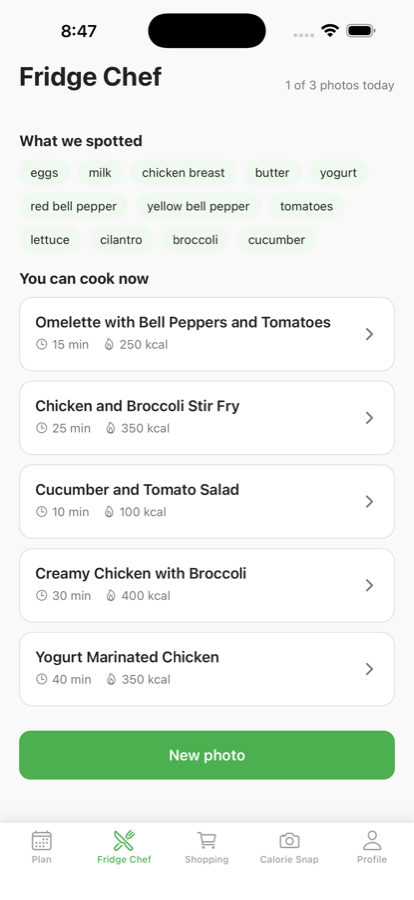
It is the counterpart to planning: a weekly plan handles the other six nights, and Fridge Chef handles the night the plan fell apart. If you'd rather not have that many improvised nights in the first place, that's what the planning side is for.
Frequently asked questions
- Is there an app that tells me what to cook with what I have?
- Yes. Cestio's Fridge Chef takes a photo of the inside of your fridge and suggests recipes you can cook immediately from what it can identify, adapted to your diet, allergies and kitchen appliances. It is included in the subscription along with weekly meal planning and the shopping list.
- What can I cook with just eggs and vegetables?
- A frittata is the most reliable answer: cook the vegetables first in an ovenproof pan, pour over beaten eggs, and finish under a grill or covered on a low heat. Fried rice with an egg scrambled through it is the other, if you have leftover rice.
- How do I know if vegetables are still safe to cook?
- Limp or slightly soft vegetables are generally fine and improve once cooked. Slime, an off smell or visible mould means throw it out — no cooking method makes that safe. When you are not sure, don't risk it.
- How do I make leftovers taste like a real meal?
- Add fat and acid at the end — olive oil or yoghurt plus lemon, vinegar or something pickled — and one crunchy element on top. That final step is the difference between food that tastes reheated and food that tastes cooked on purpose.